
Last updated November 21, 2026
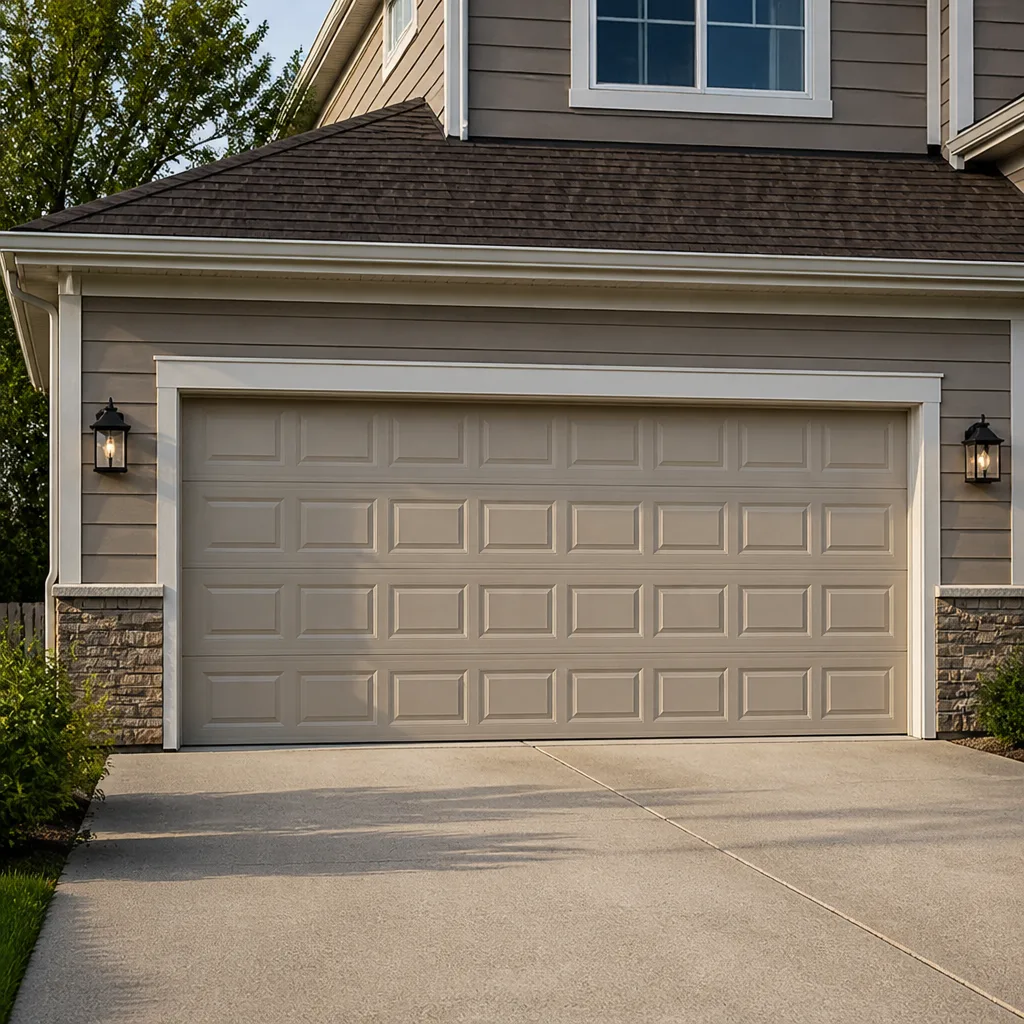 Raised-panel steel
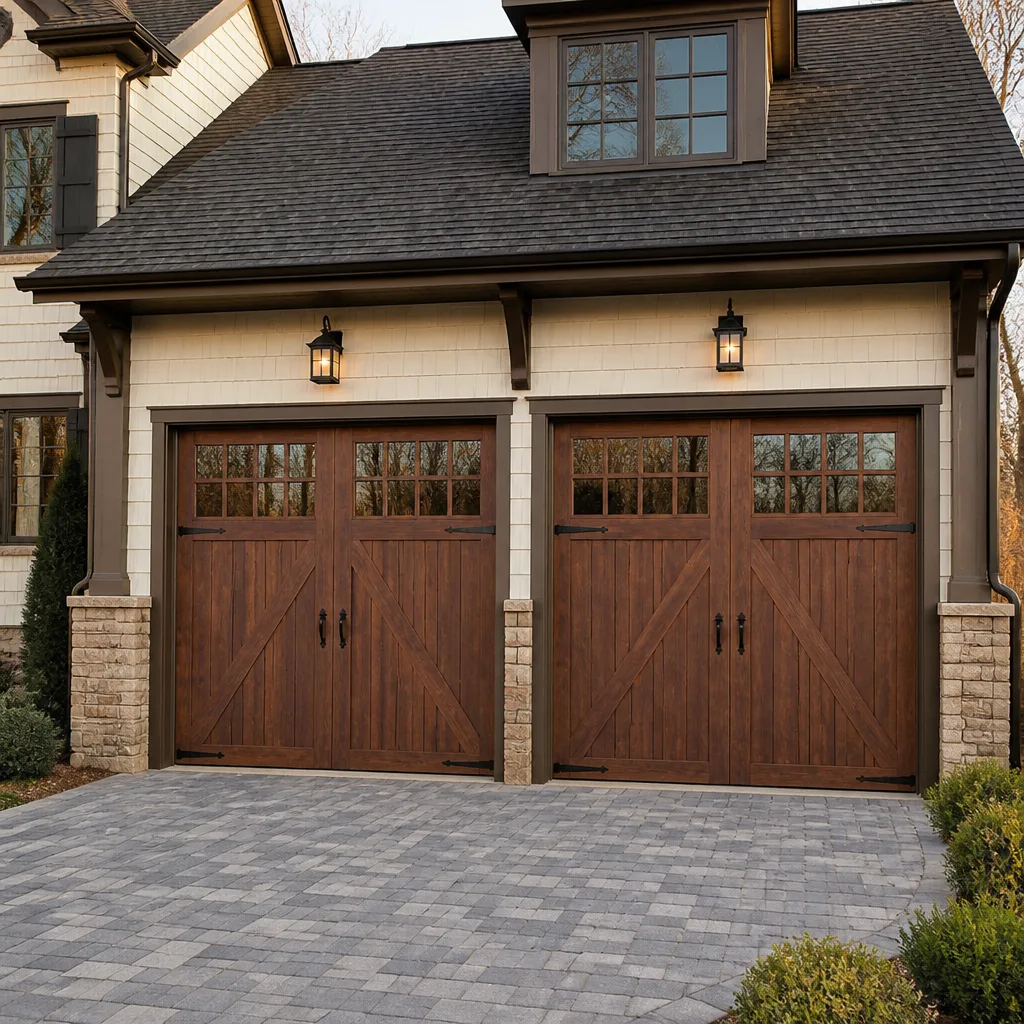 Carriage house
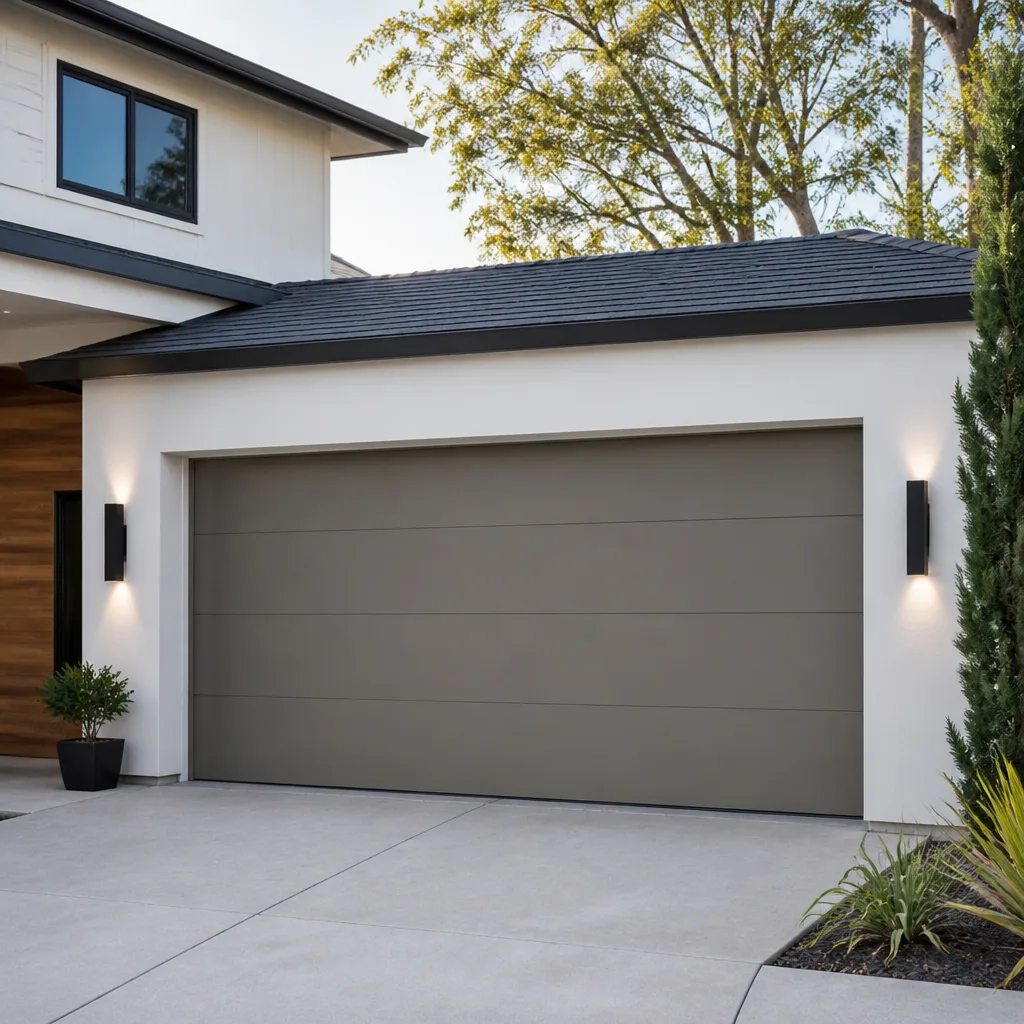 Modern flush
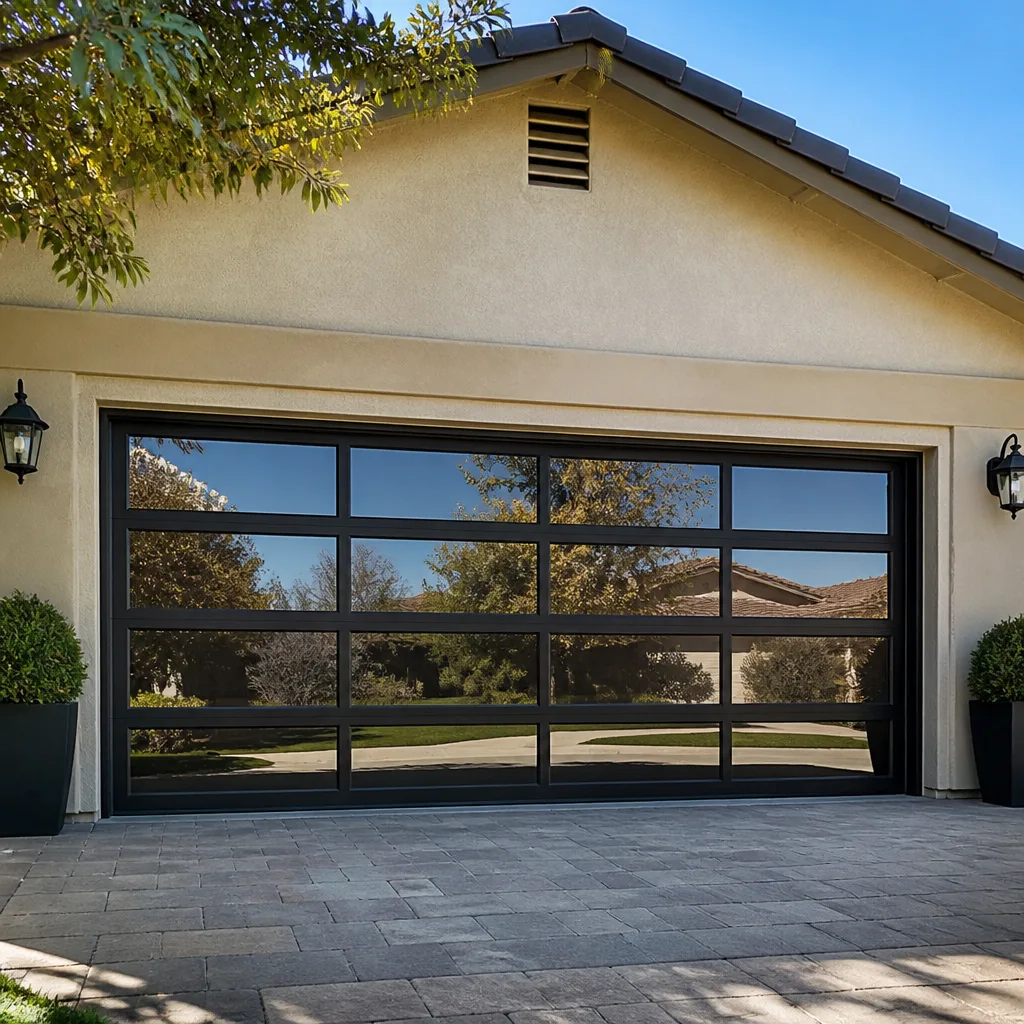 Full-view glass
 LiftMaster openers
 Chamberlain openers
Full 25-point door and opener safety check with every visit - springs, cables, rollers, tracks, and your LiftMaster or Chamberlain opener included
You get a price before we start. It does not change when the pro arrives.
Get your free estimateGarage Door Emergency Preparedness Guide for Richmond Hill Homes
Most homeowners think about their garage door exactly once: when it stops working. That’s the wrong time to learn where the manual release cord is or what a broken torsion spring sounds like. The useful work happens before the emergency, in ten quiet minutes you spend in your own garage. This guide covers three failure scenarios that account for nearly every urgent call we take in Richmond Hill – mechanical breakdown, power loss, and a door that won’t secure – with a pre-planned response for each. Not generic advice. Specific steps, specific safety conditions, and the information you should have ready so a technician arrives with the right part the first time.
Quick Answer
Garage door emergency preparedness for a Richmond Hill home means three things: knowing how to operate the manual release safely (door fully closed, never mid-travel), knowing what to do in the first five minutes after a spring breaks (leave the door where it is and don’t force it), and keeping your door brand, opener model and spring type written down so you can hand that information to a technician immediately. Prepared homeowners get their cars out faster and avoid the secondary damage that comes from forcing a broken door.
Styles & brands we work with
- Raised-panel steel
- Carriage house
- Modern flush
- Full-view glass
- LiftMaster openers
- Chamberlain openers
Table of Contents
- Scenario One: Mechanical Failure – When a Spring Breaks Mid-Cycle
- Scenario Two: Power Failure – Operating Your Door Without Electricity
- Scenario Three: Security Breach – Securing a Door That Won’t Close
- How to Use the Manual Release Cord Safely
- Battery Backup Openers and Why They Matter Here
- What to Have Ready When You Call for Emergency Service
- How Richmond Hill Conditions Affect Your Door
- The Five-Minute Preparedness Checklist
Scenario One: Mechanical Failure – When a Spring Breaks Mid-Cycle
A torsion spring failure is almost always audible. There’s a sharp crack from above the door, the door drops partway or sags, and the opener may strain or stop. The instinct is to hit the remote again or try to lift the door by hand. Don’t. The spring carries the door’s weight; once it’s gone, a door that’s mid-travel or partly open is being held by the opener and the cables alone, and those aren’t designed to carry that load. Forcing the door in that state can bend the tracks, snap a cable, or bring the whole assembly down.
Here’s what to do instead, in order:
- Stop operating the door. No remote, no wall button, no pulling.
- Identify what failed. Look above the door for a horizontal torsion spring (the wound coil on a shaft) or along the sides for extension springs. A visible gap in the coil, or a spring hanging loose, confirms the failure.
- Check for hanging cables. If a cable has come off its drum and is slack or tangled, that raises the risk and changes how the door is stabilized.
- Keep the door where it is. Don’t try to lower it, raise it, or hold it. If it’s stuck open and your car is inside, a technician can handle both the spring and getting you moving again.
- Call for emergency service and be specific. Tell the dispatcher the spring type, the door type, and the door’s current position.
Springs are not a DIY fix. Stock torsion springs carry enough stored energy to cause serious injury when released incorrectly, and the winding bars and technique a technician uses exist precisely because the load has to be transferred under control. This is the repair general handymen often decline to take on, and it’s one we handle routinely. If you’re not sure whether the door needs garage door repair or just a reset, a call gets you a straight answer. A broken spring in Richmond Hill during a cold snap is common – more on the climate factor further down.
Scenario Two: Power Failure – Operating Your Door Without Electricity
When the power goes out, your opener doesn’t work, but the door itself is fine. The manual release cord exists for exactly this. Pulling it disconnects the opener’s trolley from the door’s carriage, so you can lift the door by hand. That much most homeowners know. What fewer know is that the cord has a safe moment and an unsafe moment.
The safe release condition
Pull the manual release only when the door is fully closed. A garage door in the closed position is balanced on its springs and at rest. A door that’s halfway up, or open overhead, is holding significant energy in the springs – a full door can weigh 150 pounds or more, and releasing the trolley mid-travel takes the opener’s support out of the equation. The door can come down fast. That’s the failure the cord was never meant to cause.
What to do in a power outage
- Confirm the door is fully down. If it’s already open when the power cuts, leave it alone until it can be closed or controlled safely.
- Locate the release cord hanging from the opener rail, usually red. Stand clear of the door’s path.
- Pull straight down firmly once you’re sure the door is closed and nothing is parked in its swing.
- Lift by hand from the bottom edge, controlling the door as you raise it. Expect it to feel heavier than you think.
- Re-engage the trolley later by pulling the cord back toward the opener once the door is closed and power is restored.
If your garage is packed tight with a car parked under a partially open door, the release is not worth attempting. Call for help. For a door that’s stuck open in an outage and won’t move at all, that’s an emergency call. If your opener is dead rather than the power being out, garage door opener repair is the right path.
Scenario Three: Security Breach – Securing a Door That Won’t Close
A garage door that stays open after a failure is an open door to the home. It’s a security concern the moment it happens, and it needs an interim solution while you wait for a technician. Some options are better than others, and every one has real limits.
- Manual lowering using the release cord – only if the door is balanced and you can control it. Never with a broken spring in play.
- A C-clamp or locking pliers on the track above a roller – a stopgap for a door that’s already down but creeping up. It’s not a security lock and not a fix.
- Vice grips on the vertical track as a backstop – same idea, same limits.
- Manual door bar at the bottom edge – works only if the door is fully closed and the opener is disconnected.
None of these secure the opening itself. A door that’s stuck open is not protected by anything you clamp to the track. The right response is to get a technician out, keep the door in its current position, and avoid anything that could shift it unpredictably. If the issue is the opener refusing to complete a close cycle, this is a common LiftMaster and Craftsman symptom and usually a sensor or logic-board issue rather than a mechanical one. Either way, garage door opener repair is the call. When it’s a door that’s off its track or jammed open, garage door repair starts with getting the door to a safe position.
How to Use the Manual Release Cord Safely
The manual release is the single most important piece of hardware to understand on your garage door, and it’s the one most Richmond Hill homeowners have never tested. A door that’s never been manually operated is a door whose release you’ll be fumbling with in the dark.
The four conditions before you pull
- The door is fully closed – not partway down, not partway up.
- Nothing is parked under the door and no one is in the path.
- The spring system is intact – no broken spring, no slack or tangled cable.
- You can hold the door’s weight – a door is heavy; if it feels wrong once you start lifting, stop and let it settle.
After the release
The door now rides on its tracks and springs only. Raise it by hand from the bottom edge and control it all the way up. Don’t let it run the last few feet on its own – it can slam into its stops. When you’re ready to return to normal opener operation, close the door fully and re-engage the trolley by pulling the cord back toward the opener rail until it clicks. Test it with the opener before you trust it.
If you’ve never tested the release, do it once before you need it. It’s a five-minute exercise and worth every second. If the release won’t budge, the trolley is seized and that’s a repair call, not a household fix.
Battery Backup Openers and Why They Matter Here
Richmond Hill’s storm seasons bring power interruptions, and a garage door that won’t open during one is a problem that ranges from inconvenient to unsafe – especially if you need the car out. Battery backup openers solve it: they keep the door operating on their own battery when mains power drops.
The good news for anyone who already has a modern opener: the major brands we work on – LiftMaster and Chamberlain included, plus much of the Genie lineup – offer models with battery backup built in. If your current opener is an older unit without backup, a replacement opener is often the cleanest fix, and it fits onto your existing rail and door as a swap rather than a full-door replacement. Universal battery backup kits also exist that will keep many existing openers running through an outage, though the fit depends on the model and the rail system.
If you’re considering a change, the honest questions are: is your opener’s brand still supported, is your rail in good condition, and does your door weight match the opener’s capacity? In Richmond Hill, where plenty of homes still run older Craftsman or Wayne Dalton openers, a battery backup retrofit sometimes makes more sense than a fresh opener and sometimes the opener is due for replacement regardless. We’ll tell you which one it is. For a full assessment, see garage door installation.
What to Have Ready When You Call for Emergency Service
A prepared homeowner turns a frustrating emergency call into a fast, accurate repair. The information below gets you the right technician with the right parts on the first trip – that’s the difference between a same-day fix and a return visit.
Have this ready before you dial
- Door brand – check the sticker on the inside panel. Clopay, Amarr, Wayne Dalton and Raynor are the most common in this area.
- Door type – sectional, one-piece, or roll-up. Sectional is standard; roll-up shows up on older properties.
- Opener brand and model – LiftMaster, Chamberlain, Genie, Craftsman. The model sticker is usually on the motor housing or the back of the wall unit.
- Spring type – torsion (horizontal above the door) or extension (two springs along the sides). This one detail determines what a technician brings.
- Door position and symptom – is it open, closed, stuck partway? Is it the spring, the track, or the opener that failed?
- Age of the system (roughly) – recent openers with smart-home integration behave differently from older radio-frequency units.
That list sounds like a lot to collect. In practice, a door sticker and an opener model take two minutes. The upside is real: with the door brand and spring type known up front, a technician arrives familiar with the hardware already on your door. We work on eight major brands – LiftMaster, Chamberlain, Genie, Clopay, Amarr, Wayne Dalton, Craftsman and Raynor – so the model in your garage is very likely one we’ve seen. If it isn’t, a photo of the model sticker sent with the call saves a trip.
What happens when you call
Call (833) 508-9368. We answer 24/7, and fast dispatch runs from 7am to 7pm, Sunday through Friday. Tell us what’s failed and have the details above to hand. If you’re outside dispatch hours, your call is booked into the next opening. The written estimate sets the price per job, and it’s free.
How Richmond Hill Conditions Affect Your Door
Not every garage door failure in Richmond Hill is random. The local climate and housing stock both play a role, and understanding that shapes what to watch for.
Richmond Hill gets real swings between hot, humid summers and cold winters. Humidity is the quieter problem. Metal components – springs, cables, hinges, rollers – are all exposed to moisture inside an unheated garage, and repeated expansion and contraction works on fasteners and lube. Springs that have been in place a long time are more brittle in cold weather; that’s when most torsion spring failures happen. If your door has been sluggish or noisy for a while, the cold snap that finishes it off isn’t a surprise so much as a deadline.
Housing stock matters too. This is a borough of largely mid-century and earlier homes where garage doors have been replaced piecemeal over the years – a newer door on an older opener, an older rail with a modern motor, mixed brands in the same system. That’s a common cause of “it works but something’s off” complaints. A door brand mismatch with the opener isn’t a failure, but it’s worth knowing when you call. If the door itself has reached the end of its useful life, garage door installation is the path and we can tell you when repair has stopped being the smarter spend. For the broader repair picture, garage door repair Richmond Hill covers what we handle day to day.
One more local thing: Richmond Hill garages are often tight against the property line, and side clearance for a full track replacement can be limited. That’s a scheduling detail rather than a surprise, but it’s worth mentioning when you call so the right technician is sent.
The Five-Minute Preparedness Checklist
You can complete this in the time it takes to cross your garage and back. Do it once now and you’re covered for every emergency on this page.
- Find the manual release cord on the opener rail. Note its color and make sure the door is fully closed before you ever pull it.
- Write down the door brand and opener model on a card taped to the wall button. Include the spring type (torsion or extension).
- Test the manual release once – door closed, nothing in the path – to confirm it moves and the door lifts by hand.
- Check the door balance by disconnecting and lifting by hand from the closed position. If it feels heavier than you expect, plan for a service call.
- Check for battery backup on the opener, or note the model so you can ask about a retrofit.
- Keep a flashlight on a hook near the garage entry door – not in a drawer – and a C-clamp for a stuck-down door.
That’s the whole drill. Two minutes to find the cord, two to write the model numbers, one to hang a flashlight. The value is that you do it now, not at 2am with the door jammed and the car stuck inside.
Common Mistakes to Avoid
- Pulling the release cord while the door is partway up. The door can come down uncontrolled – this is the single most common cause of damage we see. Confirm fully closed first.
- Hitting the remote after a spring breaks. The opener is now carrying the door’s weight alone. Every press adds strain to the tracks and cables and turns a spring repair into a bigger job.
- Forcing a jammed door up or down by hand. A door off its track or hung up on a cable usually gets worse. Keep it where it is and call.
- Replacing the opener when the door is the problem. A dead opener and an off-track door can look identical. Diagnose first.
- Spot-lubing a noisy door and calling it fixed. Noise usually means wear on rollers, hinges or springs. Lube masks it for a week. The part still needs looking at.
- Leaving the garage door open during an outage. Even in a quiet Richmond Hill neighborhood, an open door is an open door. Plan for securing it before you need to.
- Calling without the model numbers. The door brand, opener model and spring type decide what a technician brings. Without them, a second trip is often needed.
See the difference
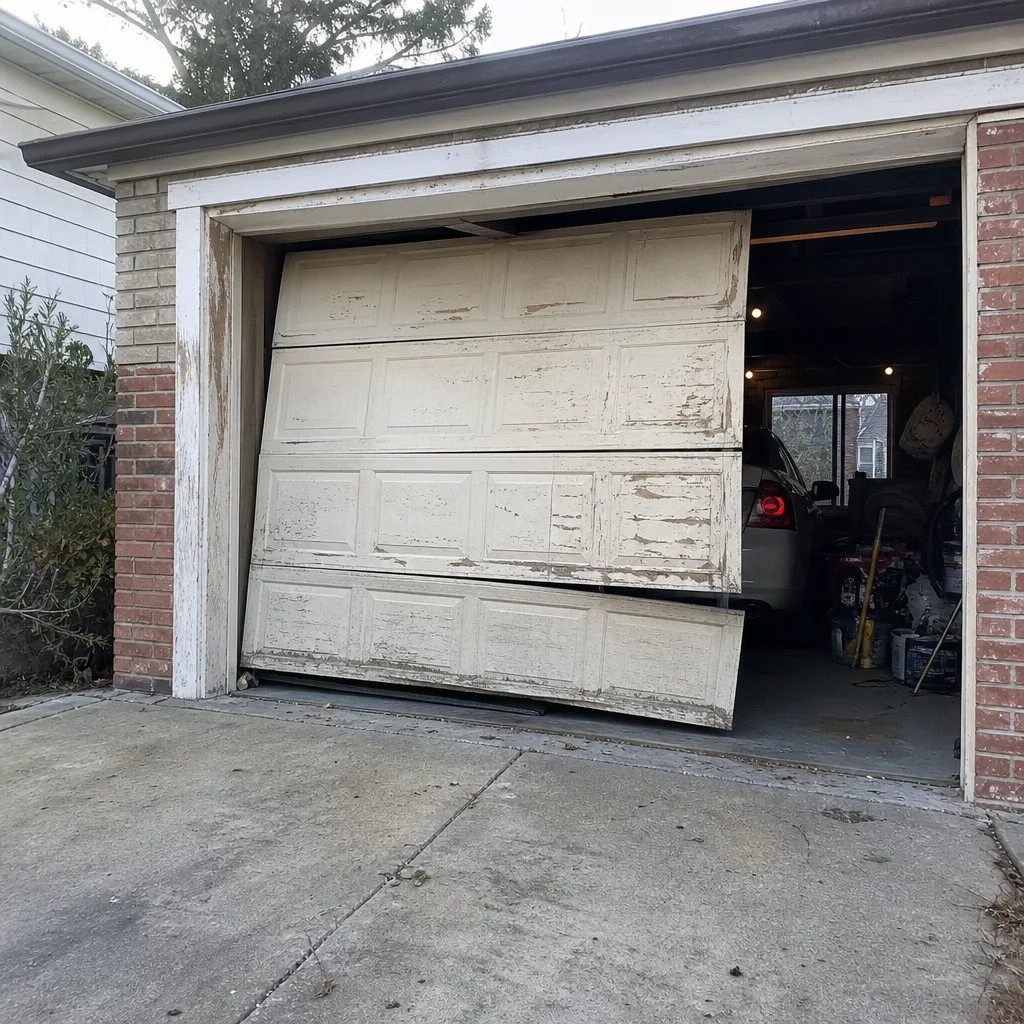 Before
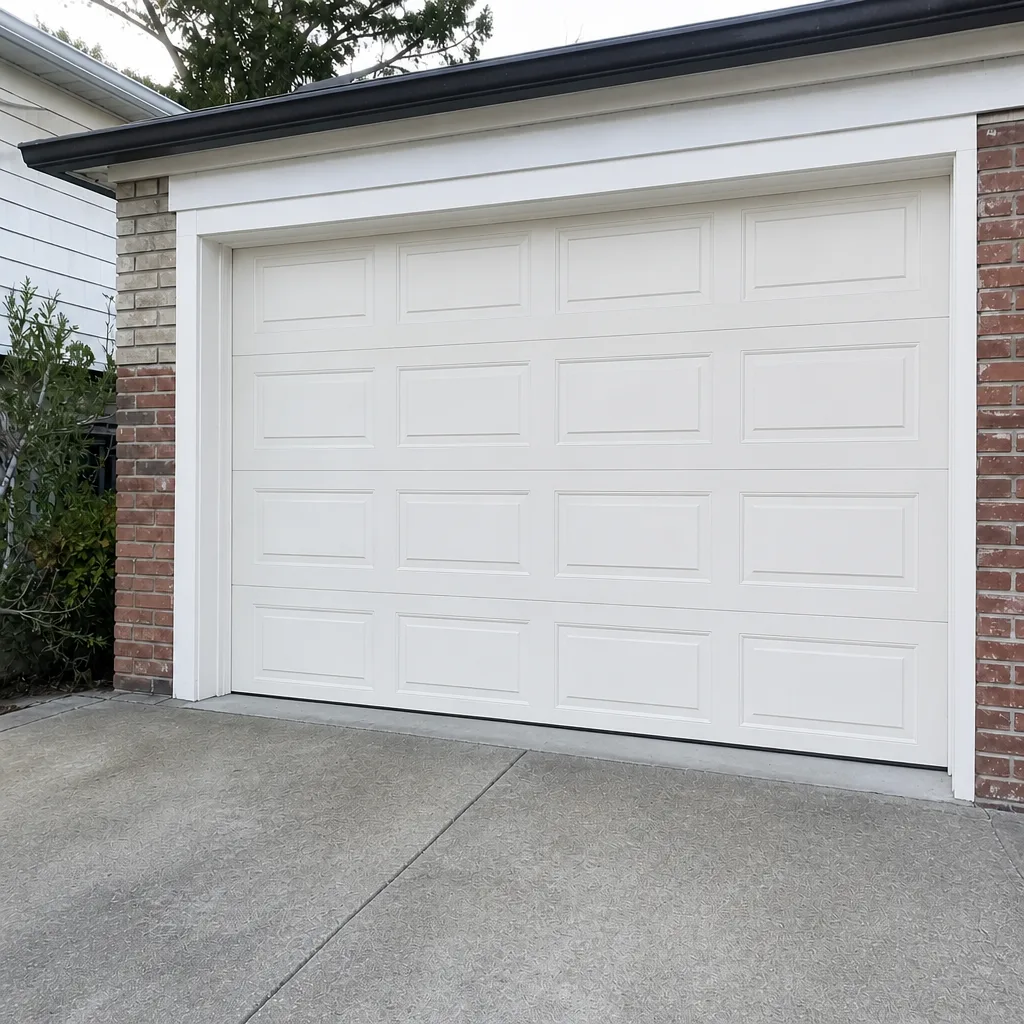 After
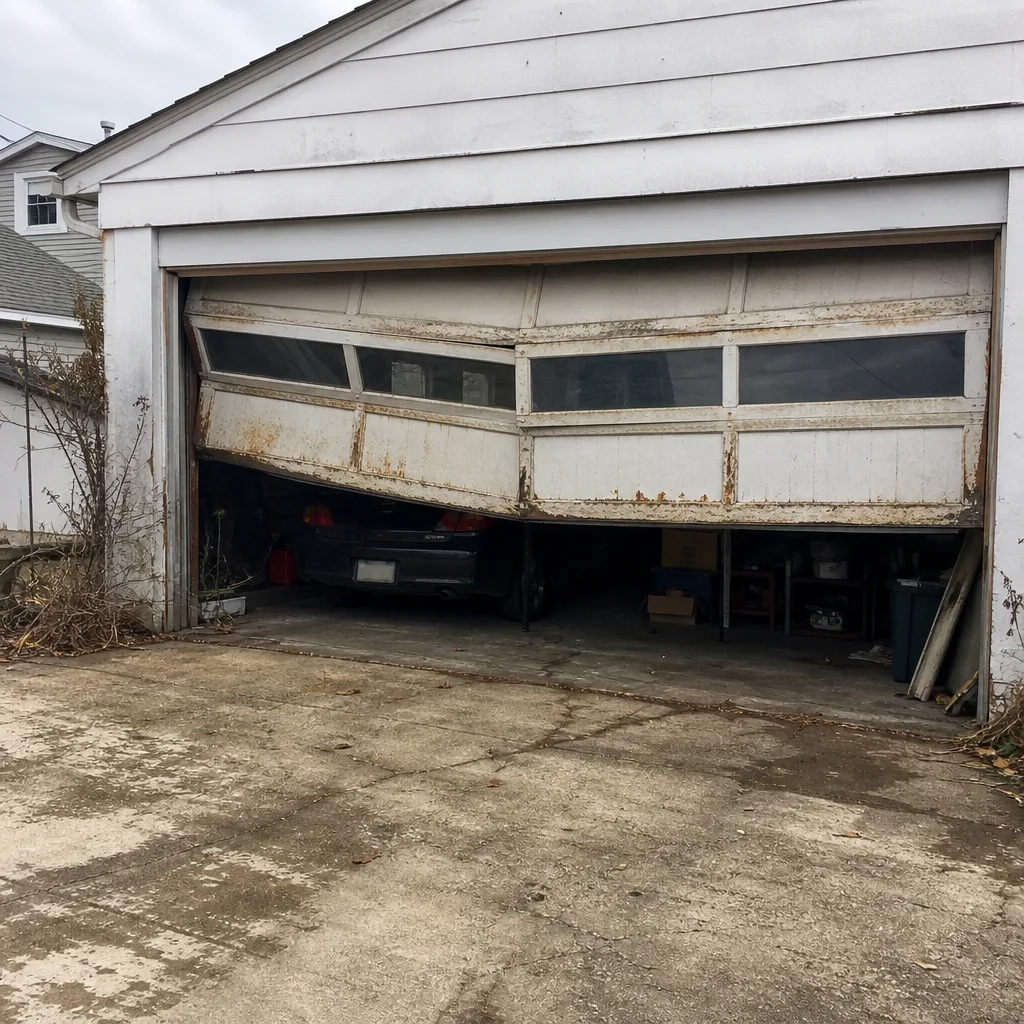 Before
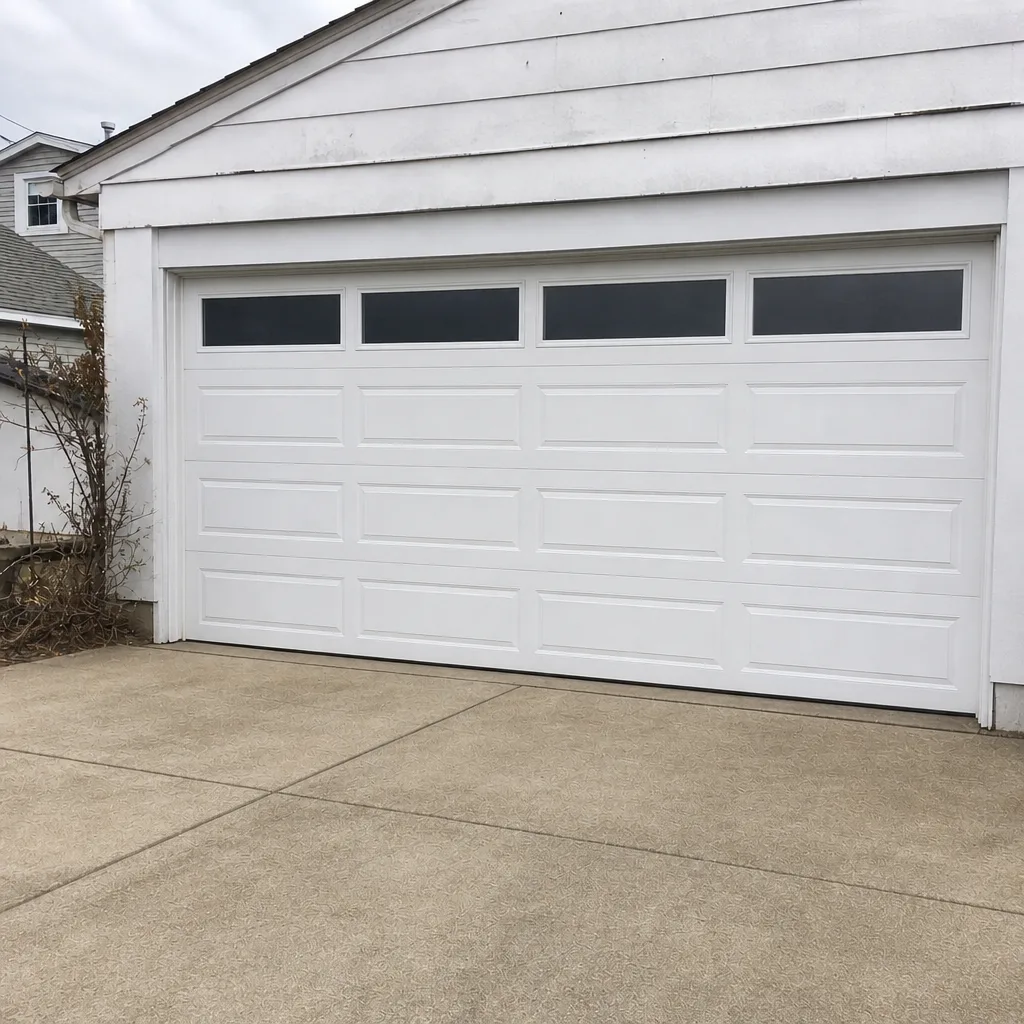 After
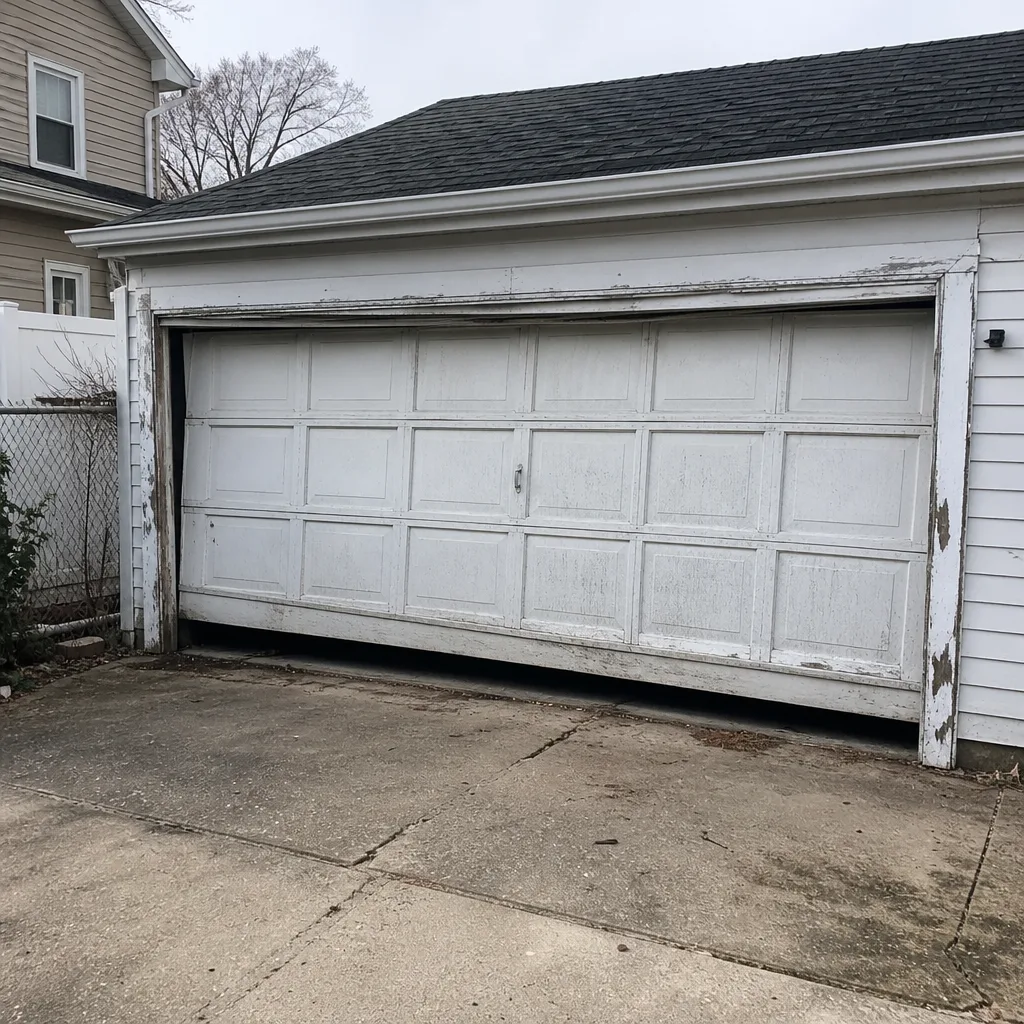 Before
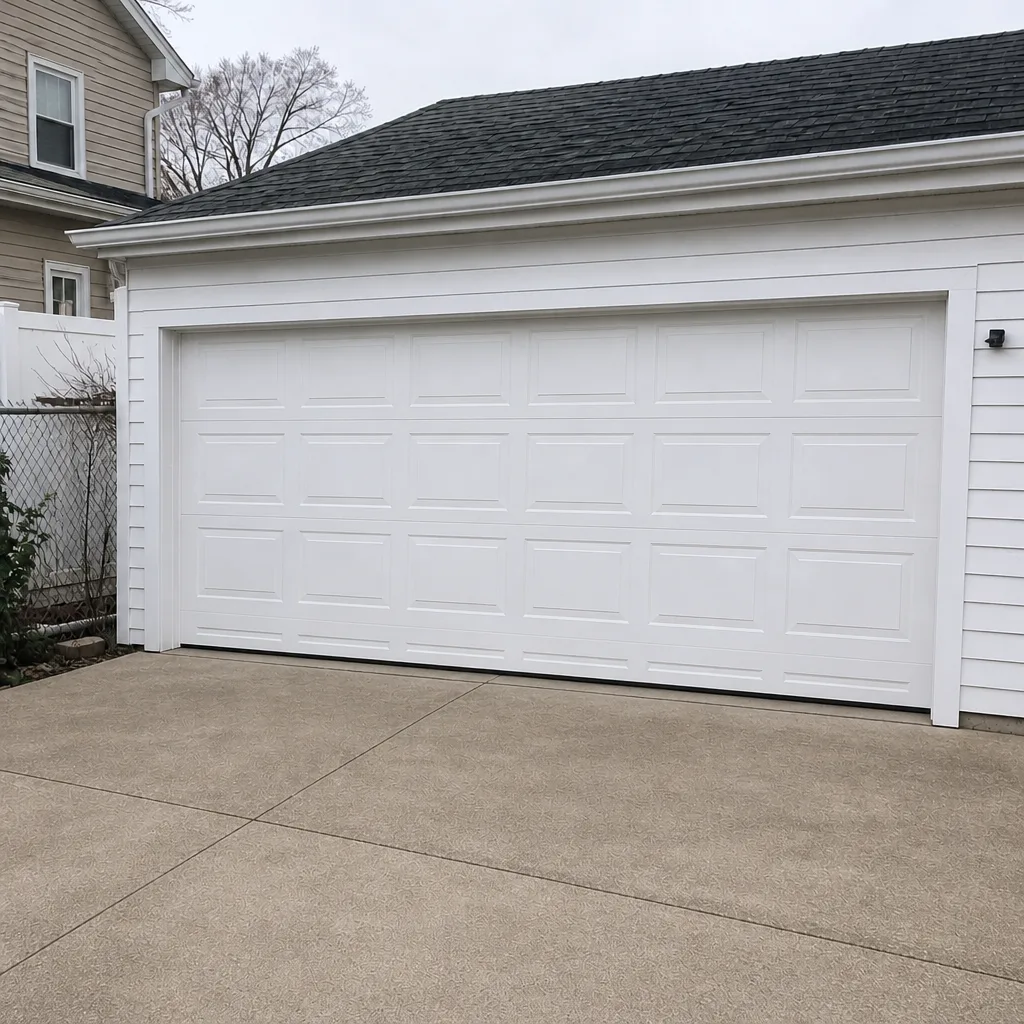 After
When to Call a Professional
Call for a professional when a spring has failed, a door is off its track or stuck partway, a cable has gone slack or tangled, or a door won’t close and your home isn’t secure. Call if the manual release won’t move, if the door drops or sags on its own, or if you’ve pushed the opener after a failure and now hear a new noise. Don’t call for a worn roller or a squeaky hinge – but do tell us when you do call. Springs and cables carry stored energy and are the two components we treat with the most caution. Garage Door Repair Richmond Hill offers free estimates in Richmond Hill – call (833) 508-9368. We answer 24/7, and fast dispatch runs from 7am to 7pm, Sunday through Friday. The written estimate sets the price for the job before any work starts, so you’ll know the cost before the technician begins.
Frequently Asked Questions
Stop operating the door immediately and leave it in its current position. Don’t use the remote, the wall button, or manual force – a door with a broken spring is being held by the opener and cables alone. Confirm the spring type (torsion above the door or extension along the sides), note the door brand, and call (833) 508-9368 for emergency service. Estimates are free.
Yes, using the manual release cord – but only when the door is fully closed. A door released mid-travel can come down fast and is the most common cause of damage during an outage. Pull the cord straight down once you’ve confirmed the door is fully down and nobody is under it, then lift the door slowly by hand. Call (833) 508-9368 if the release won’t move.
The price is set by the written estimate before any work starts, so the number you agree to is the price for the job. If the technician’s inspection turns up something the estimate didn’t cover – a bent track behind a broken spring, say – you’ll be told before anything extra is done and given a revised written estimate to approve. Call (833) 508-9368 for a free estimate.
The local professionals we connect you with are licensed and insured as their state requires. Our technicians have up to 12 years of experience, and we service products from LiftMaster, Chamberlain, Genie, Clopay, Amarr, Wayne Dalton, Craftsman and Raynor. Call (833) 508-9368 with your door brand and opener model and we’ll match the right technician.
The cost depends on what failed and what parts are needed – a single spring repair, a track realignment and a cable replacement are three different jobs with different price ranges. We give a free written estimate that sets the price before work starts, and it’s the same price whether the job is scheduled or same-day. Call (833) 508-9368 for an exact quote.
Yes, emergency garage door service is available for situations where security or access can’t wait. A door stuck open is a priority call. Have the door brand, opener model and spring type ready when you dial – that’s what gets the right parts on the first trip. Call (833) 508-9368. We answer 24/7, with fast dispatch from 7am to 7pm, Sunday through Friday.
The Bottom Line
Most garage door emergencies get worse in the first five minutes, and almost all of that damage is avoidable. Know the release cord and pull it only when the door is fully closed. Don’t touch anything after a spring fails. Secure a stuck-down door with a clamp, and call it in if the door won’t close. Keep your door brand, opener model and spring type on a card by the wall button. That’s the whole plan, and it takes one visit to your garage to put in place. When something does go wrong, call (833) 508-9368 for a free estimate. We work on the brand already in your garage, so the first trip is usually the only one.
Written by the team at Garage Door Repair Richmond Hill.