
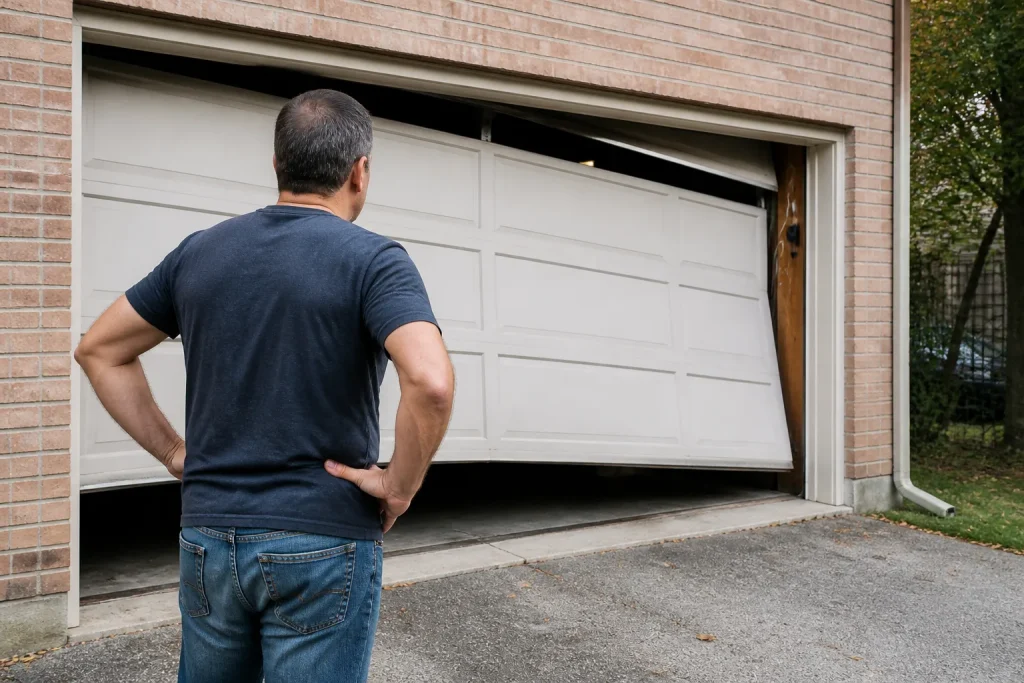
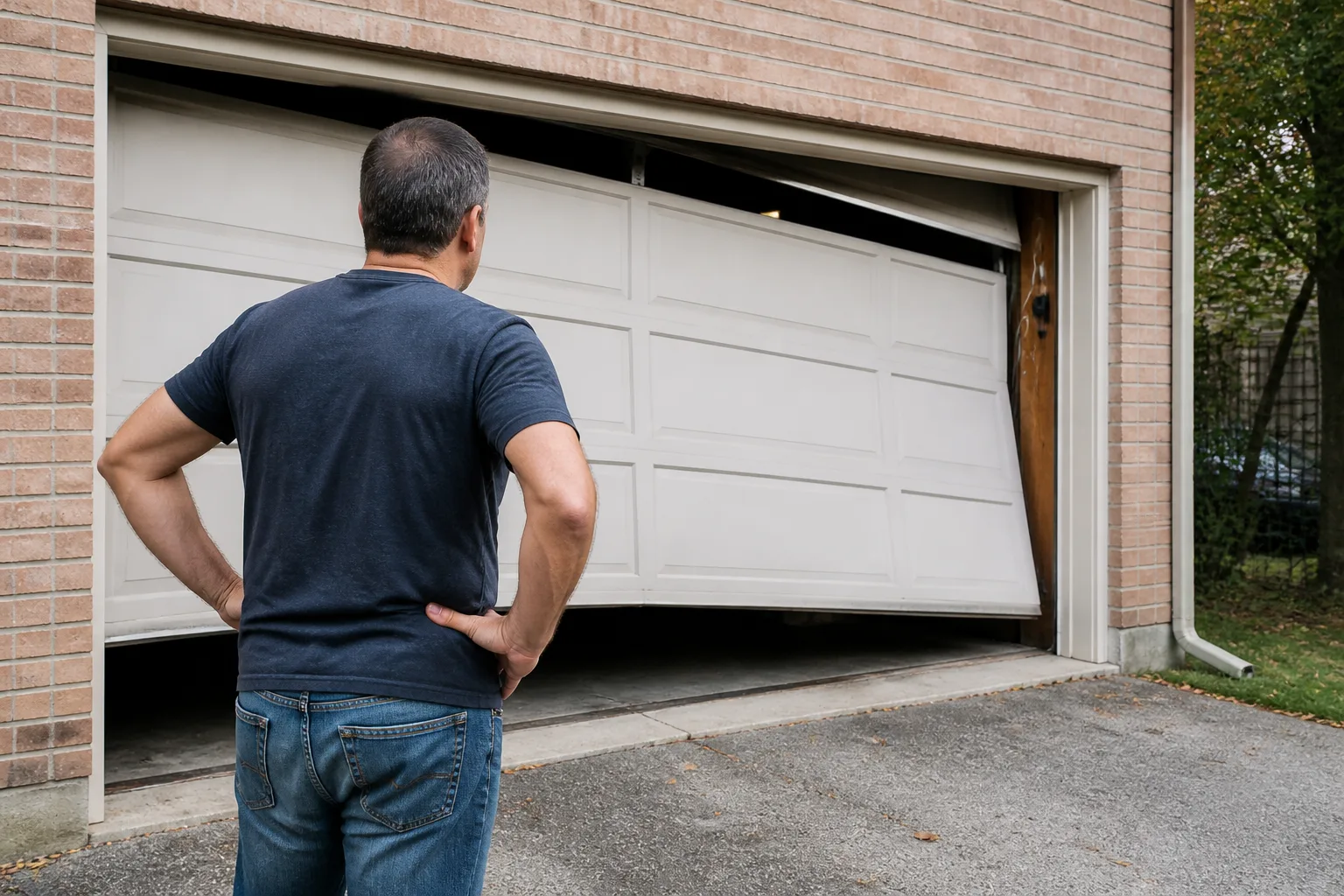
Emergency Garage Door Repair Near Me: What Richmond Hill Homeowners Should Do First
When your garage door won’t move, the instinct is to grab the handle and force it. Don’t. A snapped torsion spring holds enough stored tension to break bones or worse, and forcing a jammed door can twist panels, snap cables and turn a small repair into a full replacement. The first twenty minutes after a failure matter more than anything that follows. So here’s the short answer: stop, secure the door, and call before you touch anything. If you’d rather not DIY, call (833) 508-9368. We answer 24/7.
We’re the team behind Garage Door Repair Richmond Hill, and we’ve walked into plenty of Richmond Hill garages where a hopeful homeowner made things worse in those first few minutes. This guide is about what to do instead.
What Actually Counts as a Garage Door Emergency?
A true garage door emergency is any failure that leaves your home unsecured, traps a car you need, or creates a safety risk right now. Everything else can usually wait for a scheduled visit. That distinction matters in Richmond Hill, where a lot of homes have an attached garage that opens straight into the house. A door stuck open overnight isn’t a minor annoyance – it’s an open door into your home.
Here’s how we sort it:
- Emergency (act now): a broken torsion spring with the door stuck open or shut, a door hanging off its track, a snapped cable whipping loose, the door sitting crooked with one side lower, or any situation where the garage can’t be closed and locked.
- Urgent but not dangerous: an opener that stopped responding, a remote that quit, or a door that reverses on its own. These still need attention because you can’t get in or out normally, but the door itself isn’t a hazard.
- Can wait for a scheduled visit: a noisy door, a slow opener, a dented bottom panel, a weather seal coming loose, or a door that’s just stiff on cold mornings. These are worth fixing but not worth a middle-of-the-night scramble.
When the door won’t move, we do. If you’re unsure which category you’re in, describe it on the phone – that’s often enough for us to tell you whether to stay put or book a repair.
The Four-Step Triage Sequence: What to Do Before Anyone Arrives
Before you call, run through four steps. They take a few minutes, they’re safe to do, and they make the technician’s job far easier when they arrive.
- Disconnect the opener. Unplug the opener unit from the wall outlet, or switch off its breaker. That stops it from trying to cycle while you’re inspecting the door, which is especially useful if you have a smart opener like a LiftMaster or Chamberlain that might reconnect on its own.
- Look, don’t touch, for cable and spring damage. Stand back and shine a light along the torsion bar and the cables down each side. A broken spring usually shows a visible gap in the coil. A snapped cable will be hanging loose. If you see either, stop right there – do not try to open the door by hand.
- Test the manual release only if the door looks intact. If there’s no visible spring or cable damage, pull the red emergency cord hanging from the opener trolley. That disconnects the door from the motor. Try lifting the door by hand – it should feel light and balanced. If it’s heavy or fights you, let go and leave it.
- Secure the door where it is. If the door is closed, leave it. If it’s stuck open, close it carefully by hand only if it moves freely, then lock it or wedge it with a brace so it can’t drop. If it’s hanging crooked, don’t force it – barricade the area and keep people and pets clear.
That’s the whole sequence. None of it involves tools, and none of it puts your hands near a spring or cable under load.
Which DIY “Fixes” Make the Problem Worse?
In our experience, most of the expensive outcomes start with a well-meaning attempt at a quick fix. Here are the moves that turn a small job into a bigger one – and, in the case of springs, that put people in hospital.
- Forcing the door open. A door with a broken spring or a binding track will resist. Pushing harder bends the panels, tweaks the track and can pull the opener arm out of the door. A damaged panel alone can cost more than the original repair.
- Trying to retension or replace a torsion spring yourself. This is the one that genuinely worries us. A torsion spring is wound to counterbalance the entire weight of the door, and the winding bars needed to adjust it are specialty tools most people don’t own. Springs are not a DIY fix – here’s why we handle them differently: we wind and set them with the proper bars and technique, and we never do it alone. Do not attempt this.
- Pulling the manual release on a door that’s off-track. If the door is crooked, releasing it from the opener can let it crash down or swing dangerously. Leave it engaged and call.
- Spraying lubricant on a broken spring or a bent track. It masks the visible symptom but does nothing for a structural failure. Grease on a snapped cable also makes it harder to inspect.
- Repeatedly pressing the opener button. If the door is jammed, each attempt strains the opener’s gears. A smart opener may lock itself out, and a legacy unit may strip its drive gear – one more thing to repair.
If you’ve already tried one of these, don’t panic. Just tell the technician what you did when you call, so they know what to check.
What to Have Ready Before You Call
The more detail you can give on the phone, the better prepared the technician is when they arrive – and the less time you spend watching from the driveway. Before you dial, have these ready:
- Door width and type: single or double car, and whether it’s a sectional door or a one-piece tilt-up.
- Opener brand and model: check the label on the back of the unit. Whether it’s a Genie, a LiftMaster, a Chamberlain or an older Craftsman, telling us up front means the technician arrives familiar with the exact hardware already in your garage. If you can’t find the label, a photo works.
- The symptom, in plain words: “the door hums but won’t lift,” “there’s a loud bang and now it’s stuck,” “one side is lower than the other.” Specifics beat “it’s broken.”
- What you’ve already tried: did you pull the release cord, check the breaker, force it open? All useful.
- Any visible damage: a gap in the spring, a hanging cable, a bent track, a dented panel.
- Access notes: where the garage is, whether the driveway is clear, and whether you can open the front door to let someone in.
A quick phone call with that information is worth ten minutes of watching a technician guess at the problem.
What to Expect from an Emergency Call in Richmond Hill
Emergency garage door service is a real service line for us, not something tacked onto the end of the day. When you call, we answer 24/7. Fast dispatch from 7am to 7pm, Sunday through Friday – and we’re closed Saturday, so if a door fails on a Saturday, call anyway and we’ll book the visit into the next opening. A call outside dispatch hours gets booked the same way.
What we ask when you call: the details from the previous section, plus the door’s current position. From there we can tell you what’s safe to do (usually nothing but securing the door) and what to avoid. The goal is a same-day repair where possible, with the price quoted and agreed before any work starts.
We work on the brand already in your garage – LiftMaster, Chamberlain, Genie, Clopay, Amarr, Wayne Dalton, Craftsman and Raynor all come through us, and our technicians have up to 12 years of experience. That matters in a failure because the fix depends on the specific hardware, not a generic playbook. Your door, diagnosed right the first time. You’ll also know whether the report comes back as a repair or whether a replacement is the better long-term call – we handle both.
When to Call a Pro (and a Note on Spring Safety)
If the door is stuck, off-track, hanging crooked, or you can see a broken spring or snapped cable, stop and call. A torsion spring failure is the one job we genuinely ask homeowners not to attempt: the stored tension is enormous, and there’s no safe way to release it without the right tools and training. A trained professional handles it in minutes; a DIY attempt can cause serious injury. The same goes for any door you suspect is off-track – the weight and mechanics mean it can drop or swing without warning.
For anything less severe, a noisy door or a slow opener, a scheduled visit is fine. The one thing we always ask is that the price is quoted and agreed before work starts, so there are no surprises on the invoice.
Related services in Richmond Hill: we cover garage door repair, garage door opener repair and garage door installation, all from one call.
The Bottom Line
The most important thing you can do after a garage door failure is nothing – as in, don’t force it. Disconnect the opener, look for cable and spring damage, test the manual release only if the door looks intact, and secure the door where it stands. That’s the whole game in Richmond Hill. The second most important thing is to call with the door’s width, the opener brand and a clear description of the symptom, so a technician arrives prepared with the right parts.
Springs and cabling are not DIY territory. Leave them to a trained professional, and if a replacement is on the horizon, ask about garage door repair Richmond Hill and a new door assessment before making a call – a repair may still be the smarter move.
If you’re in Richmond Hill and need help, Garage Door Repair Richmond Hill offers free estimates – call (833) 508-9368. We answer 24/7. Fast dispatch from 7am to 7pm, Sunday through Friday.
Frequently Asked Questions
Most emergency repairs come in around $150 to $350 depending on what failed – a spring replacement sits toward the upper end, while a simple opener reset or track adjustment sits lower. A matched pair of springs typically costs about twice a single spring because both are usually replaced together. You’ll get a written estimate before any work starts, so the price is agreed up front. Call (833) 508-9368 for an exact quote – estimates are free.
Same-day repair is often possible in Richmond Hill when you call during dispatch hours. Call (833) 508-9368, describe the problem, and we’ll let you know what’s available for the day. We’re closed Saturday; requests that come in then are booked into the next opening.
Only if there’s no visible spring or cable damage and the door looks level. If the door is crooked, off-track, or you can see a broken spring, don’t pull it – the door can drop or swing. Secure it where it is and call a professional.
The local professional we connect you with is licensed and insured as their state requires, and our technicians have up to 12 years of experience. Ask for details when you call and we’ll walk you through what to expect before the visit.
Written by the team at Garage Door Repair Richmond Hill.
Need Garage Door Help?
Call Garage Door Repair Richmond Hill - the local pro we connect you with is licensed and insured, here with fast help in Richmond Hill.
(833) 508-9368