
Top Signs You Need Garage Door Service – Don’t Ignore These
A garage door rarely fails without warning. It gives you weeks of signals first: a slower open, a fresh noise, a panel that sits a little crooked. Most homeowners read those signals as normal aging until the door stops moving entirely. If you’ve noticed any of the symptoms below, get the door looked at. If you’d rather not diagnose it yourself, call (833) 508-9368 and we’ll take a look. In our experience, catching these early saves you a bigger repair down the line.
Key Takeaways
- A door that opens slower than it did six months ago is usually a spring losing tension, not the opener “getting old.”
- Grinding and squeaking mean different things. One is often fixable at home; the other needs a technician.
- Asymmetrical movement, sagging panels and a door that pauses mid-travel are call-today signals, not watch-and-wait ones.
- Richmond Hill’s cold winters and humid summers speed up certain failure types, especially on older steel doors.
- Symptoms that require a technician: frayed cables, a crooked door, a snapped spring. Never touch these yourself.
What are the early warning signs a garage door needs service?
The earliest warning signs are a door that moves slower than it used to, a new sound during travel, or a door that doesn’t run smooth and even from side to side. None of these mean the door is about to fall down. They mean a component is working harder than it should, and that extra effort is eating into something.
Here’s the part most homeowners miss. A garage door is a balanced system. The springs carry the door’s weight, the opener only has to overcome a small imbalance. When a spring loses tension, the opener starts dragging weight it was never designed to carry. That’s why a door that takes three seconds longer to open than it did last winter is telling you about the springs, not the opener. The motor is compensating. It won’t compensate forever.
The six symptoms below are the ones worth knowing by name. We’ve sorted them into “monitor this” and “call today” so you can prioritize.
Six specific symptoms, and what each one actually means
1. Asymmetrical movement (call today)
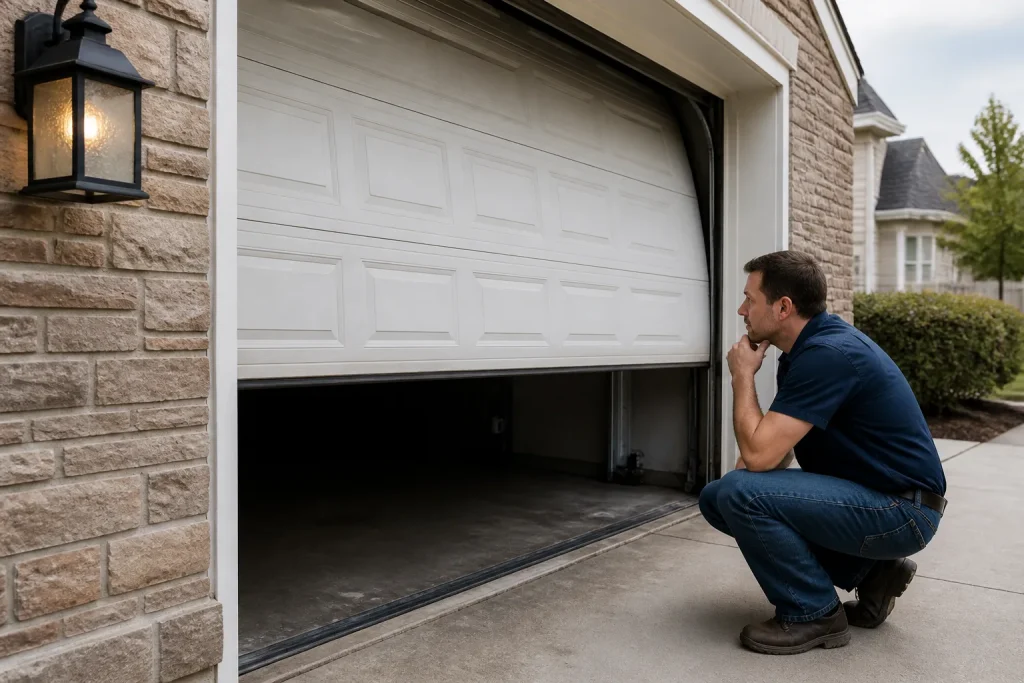
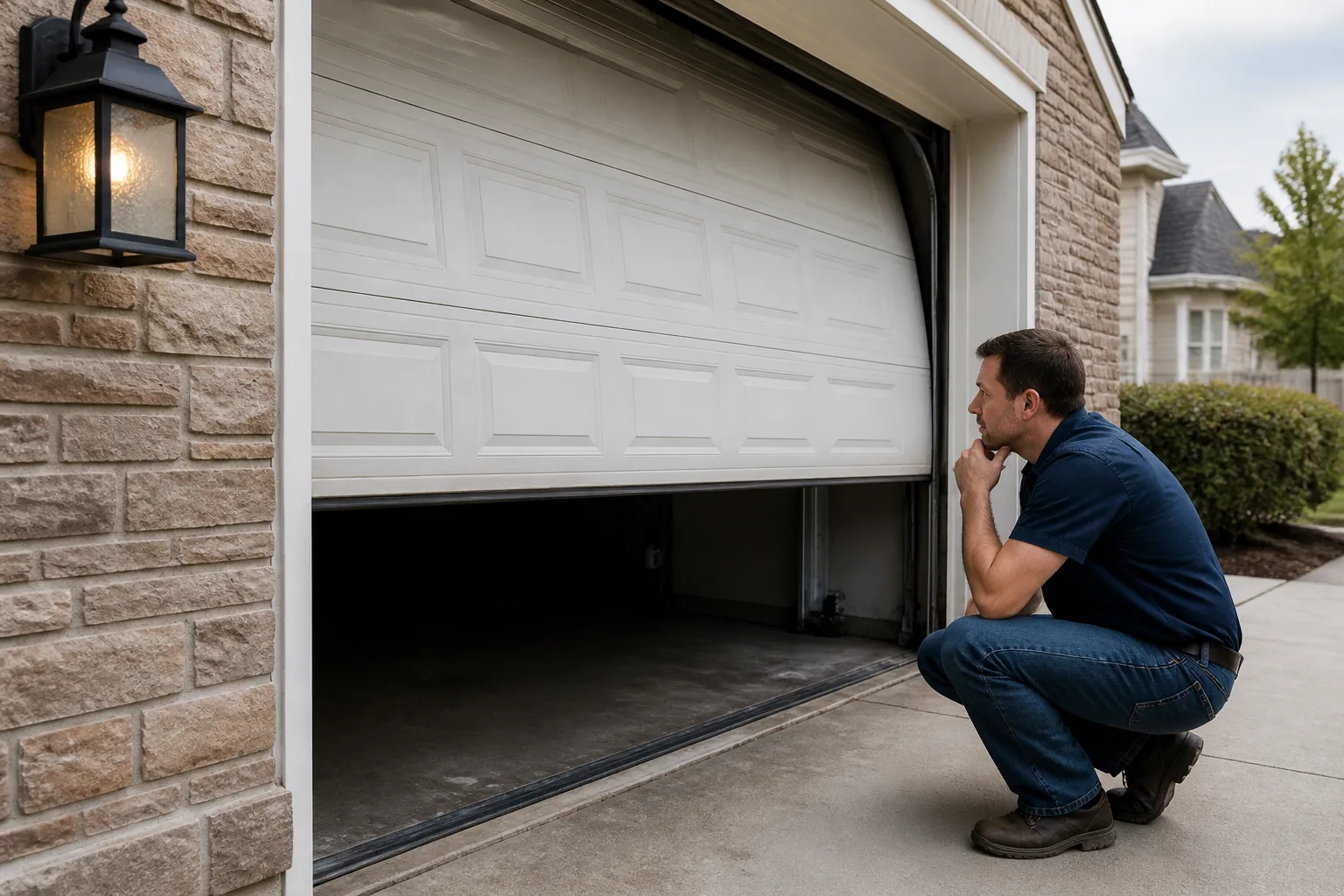
Watch the door travel. Both sides should rise and fall evenly. If one side lags behind or the door looks like it’s tilting, the springs on one side are out of balance or a cable has gone slack. Left alone, an uneven door strains the track and the opener. On a Richmond Hill door that’s heavy duty or has a wide opening, this shows up faster.
2. Grinding vs. squeaking sounds (squeak: monitor, grind: call)
Squeaking is usually metal-on-metal dry contact. It’s often a lubrication issue and easy to address. Grinding is different. It signals bearings or rollers that have worn out, or a door rubbing its track. That’s a mechanical failure in progress, not a maintenance item.
3. The door pauses mid-travel (call today)
A door that stops, hitches or reverses halfway is usually hitting resistance from a tight track or a failing spring. Modern openers have safety sensors that reverse the door when they sense resistance. A pause is often the opener protecting you from a bigger problem. Don’t override it with a force adjustment.
4. Visible cable fraying (call today, don’t touch)
A quick visual check of the cables along the sides is worth doing. Frayed, kinked or rusted cables must be serviced by a trained technician. These cables are under extreme tension. This is where we say clearly: cables and springs are a trained professional’s job.
5. Slower response time (monitor, then service)
If your LiftMaster or Chamberlain opener takes longer to engage, the springs may be sagging or the opener’s drive system is wearing. It’s not always the opener itself, even though that’s the assumption many homeowners make. Diagnosing the actual cause is where garage door opener repair comes in. On older Genie or Craftsman openers, the cause is often mechanical wear elsewhere in the door.
6. Sagging or misaligned panels (call today)
A panel that droops or doesn’t sit flush points to a bent track, loose hinges or structural wear. On a heavier steel door like a Clopay, Amarr or Wayne Dalton model, weight distribution matters. A sagging panel left alone can bind the whole door.
What’s safe to fix yourself and what needs a technician immediately
Split the list in two. Lubrication, minor adjustments and a visual inspection are homeowner territory. Springs, cables, tracks and anything holding the door’s weight are not.
Safe to handle yourself:
- Applying garage door lubricant to hinges, rollers and tracks.
- Wiping down and tightening the small brackets that hold the safety sensors.
- A visual check of cables and springs for obvious fraying or rust.
- Clearing debris and dirt from the track channels.
Needs a technician immediately:
- Any broken spring. This is the highest-risk part of any garage door, and many handymen won’t touch it. We handle garage door repair for these jobs specifically because the tools and training matter.
- Frayed, snapped or loose cables.
- A door off its tracks or sitting crooked.
- An opener that won’t respond, reverses on its own, or trips a breaker.
The simple rule: if the part carries the door’s weight or lifts it, that’s ours. Everything else you can learn to maintain. We’d rather you save the small stuff for yourself.
How Richmond Hill’s seasons accelerate these failures
Richmond Hill sees Queens winters that drop well below freezing, and summers that stay humid for weeks. That swing matters for your door. In cold months, metal components contract and lubricants thicken. Springs take the load less smoothly, and a spring already near the end of its life is more likely to snap during a sudden cold snap. Wooden doors and wood-framed openings swell and shrink with humidity, which can throw off the track alignment and pull the door out of square.
In summer, humidity can make hinges stiff and rollers drag, which puts more strain on the opener. A Clopay or Amarr steel door with worn rollers will grind more in a humid stretch. If your door is slow to start in January, that’s the cold revealing a tired spring. If it grinds in July, that’s often worn bearings and rollers. Same door, different month, different cause. That’s a big reason the timing of a symptom is worth telling your technician.
Wherever you are in Richmond Hill, from a tight attached-garage setup to a larger detached build, the season-to-season lesson is the same: address the warning signs before the cold or the heat finishes the job.
How long do you have? A realistic timeline for the three most common issues
The honest answer depends on the component, but the three most common issues follow predictable patterns. Here’s how we’d rank urgency.
Worn springs
The most deceptive one. Once tension starts to fade, symptoms can appear weeks or months before the spring actually snaps. Generally, a door that’s getting slower gives you a window of a few weeks to a couple of months to schedule service. In Richmond Hill winters, that window can shorten. Treat a slow door as a scheduling reminder, not a someday item.
Worn bearings and rollers
Grinding usually moves slowly. You’ll notice noise before anything fails. Left alone, worn rollers wear the track and put load on the opener. This one is a “monitor, then service within a few weeks” situation rather than a same-day emergency, unless the door pauses or reverses.
Stretched or frayed cables
The tightest timeline. Cables rarely give you weeks of warning. Fraying is a call-today item. A cable that fails can let the door drop. If you see fray, stop operating the door and call us. Our technicians are equipped to handle this safely, with proper tools.
For the two watch-and-wait items, use the timeline to schedule rather than stress. For cables, don’t wait.
When to call a pro (and what to tell them)
If you’ve ticked more than one symptom, or your door is off-track, crooked, or making a grinding or banging noise, call a technician. When you get on the phone, mention the age of the door, the brand (LiftMaster, Chamberlain, Genie, Craftsman, Clopay, Amarr, Wayne Dalton or Raynor), the specific symptom and the weather pattern when it appears. We work on the brand already in your garage, and knowing what you’ve got lets us diagnose it right the first time.
From opener to panel, one call covers it. We handle garage door repair for urgent failures, and if the door is far enough gone, garage door installation to replace it. If you’re in Richmond Hill and need help, we answer 24/7, with fast dispatch from 7am to 7pm, Sunday through Friday.
The Bottom Line
Most door failures announce themselves before they happen. Slower travel, a new sound, a crooked panel and frayed cables are your door’s version of a check-engine light. Spring and cable signs deserve a call right away. Worn rollers, minor squeaks and sensor issues can wait a few weeks while you schedule. The door will keep working while you wait, but it won’t fix itself, and the repair gets more expensive once a worn part takes the track or opener down with it.
If you’re in Richmond Hill and need help, Garage Door Repair Richmond Hill offers free estimates. Call (833) 508-9368 for a free estimate. We answer 24/7. Fast dispatch from 7am to 7pm, Sunday through Friday. Our technicians have up to 12 years of experience, and the price is quoted and agreed before any work starts.
Frequently Asked Questions
The first signs are usually a longer open time, a new sound during travel, or a door that doesn’t move evenly. Any of those means a component is working harder than it should. If you notice one, get it inspected before it becomes an emergency. Call (833) 508-9368 and we’ll take a look.
Sometimes. Lubrication, tightening sensor brackets and clearing tracks are safe homeowner jobs. Springs and cables are not. They carry the door’s weight under high tension. If you see frayed cables or a broken spring, stop operating the door and call a technician.
A squeaking door can give you weeks or even months to schedule service. A grinding door is closer to failure, and a frayed cable is a call-today item. Use the timeline to prioritize, not to relax. Call (833) 508-9368 for a free estimate and a realistic assessment.
Yes. We work on the brand already in your garage, including LiftMaster, Chamberlain, Genie, Clopay, Amarr, Wayne Dalton, Craftsman and Raynor. That means we arrive familiar with the exact hardware on your home, from opener to springs. Call (833) 508-9368 to book an estimate.
Written by the team at Garage Door Repair Richmond Hill.
Need Garage Door Help?
Call Garage Door Repair Richmond Hill - the local pro we connect you with is licensed and insured, here with fast help in Richmond Hill.
(833) 508-9368